
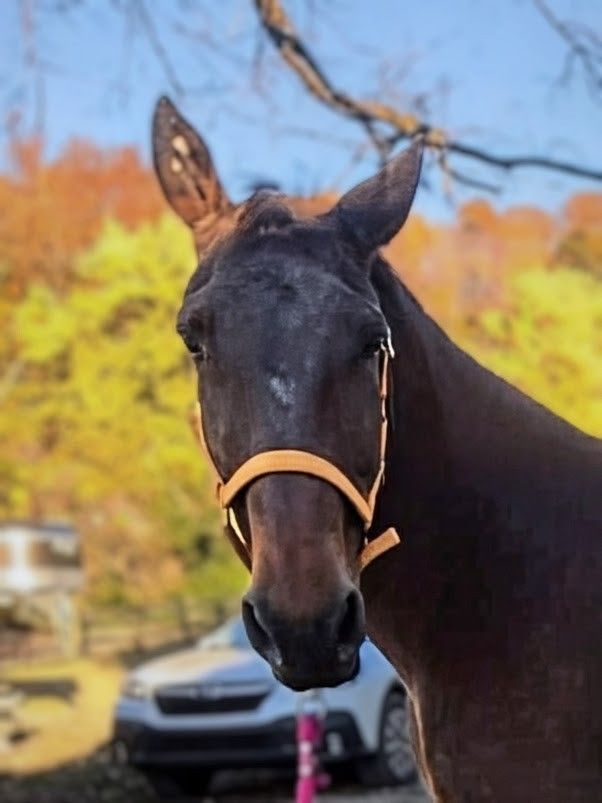
Chances are you will know it if you have ever encountered a horse with Aural Plaques in the ear because it will display extreme ear shyness if the scales are present in it.
This scaly stuff is usually papilloma virus thought to be either deposited by biting flies or an inflammatory response to the bites.
Caught early enough it can be successfully treated but it often isn’t seen until it’s pretty scaly because people don’t often peer into equine ears.
Once the scales are noticeable treatment becomes much more of an issue, and the curing of it can cause just as much ear shyness as the deposits themselves do since it is painful for the horse 2-3 times per week for several weeks.
Because of the potential for an owner to sport a broken nose, veterinarians often advise to leave it be, after diagnosing it as such, and the use of a fly mask with ears to prevent further fly issues.
This advice is sound but leaves the owner trying to figure out how to bridle the horse, without disastrous results.
If your horse has AP solely in one ear, a supple one eared bridle is a great solution.
Your other choice is to use a soft bridle with no brow band, unbuckle one of the sides of the headstall, throw the crown piece over the poll behind the ears, then re-buckle it.
This sounds complicated but actually is not too hard to learn to do (speaking from experience since I worked with a horse who would flat out kill you over an AP ear) and the horse soon adapts to the routine.
Having soft leather is the key to both choices. On a one ear stiff leather will quickly rub raw spots on the good ear and on the throw it method, stiff leather just bounces off.
If you have a head shy horse, you owe it to her to check for this painful condition before trying to “fix” the issue with some sort of training. Those scales hurt them to bend and there is no humane way of training them out of reacting to it.
While a horse is having a float can be a good chance for your vet to make a definitive diagnosis. (some ear sarcoids can resemble AP)
If you do opt to treat it we strongly suggest you ask your veterinarian about sedation for each treatment so it will be easier and safer to carry out.
Some veterinarians are finding much less painful success with acyclovir treatments. We hope more studies come out on that soon.
Please be aware that horses who have already had this issue once are extremely reactive to the biting insects and unless a fly mask with ears and/or a repellent is kept on the horse, reoccurrence of the papilloma scales is highly likely.
